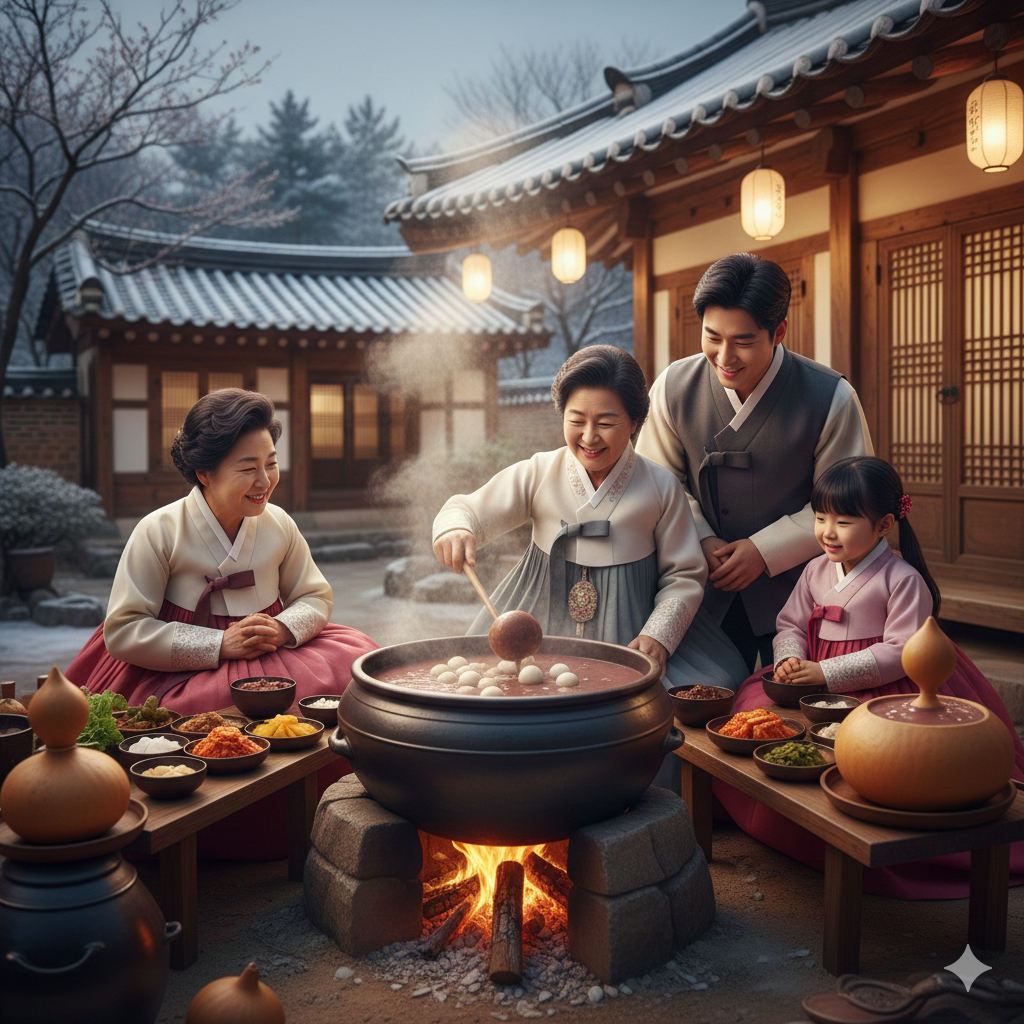
Dongji: The Winter Solstice in Korea ( Dec. 21 or 22 )
A Day of Light, Warmth, and Red Bean Porridge
Dongji (동지) is the winter solstice in Korea and usually falls around December 21st or 22nd.
It marks the shortest day and the longest night of the year.
In traditional Korean culture, Dongji was more than just a seasonal marker.
It symbolized the moment when darkness reached its peak and light slowly began to return,
making it a meaningful day of renewal, protection, and hope.
Because of this symbolism, Dongji was sometimes called
“the small New Year” in the past.
Why Was Dongji Important?
Long ago, Koreans believed that the longest night of the year carried powerful energy.
Some even thought that bad luck or negative spirits were strongest during this time.
To protect their families and homes, people prepared special foods
and followed traditions meant to bring health and good fortune through the winter.
Traditional Dongji Food: Patjuk (Red Bean Porridge)
The most well-known food eaten on Dongji is Patjuk,
a warm porridge made from red beans and small rice balls.
In Korean tradition, the color red was believed to drive away bad energy.
Eating red bean porridge on Dongji was a way to stay protected and healthy.
Some families also placed a small bowl of Patjuk near the front door
or around the house as a symbolic gesture to keep bad luck away.
💡 Did You Know?
Adult Dongji and Child Dongji
In the past, Koreans divided Dongji into two types:
Adult Dongji and Child Dongji.
This distinction was based on when Dongji fell in the lunar calendar
and reflected traditional beliefs about protecting children.
Why were Dongji divided into Adult Dongji and Child Dongji?
People believed the winter solstice carried strong seasonal energy.
Since children were considered more sensitive, Dongji was divided
as a way to keep them safe.
When was Dongji called Adult Dongji or Child Dongji?
If Dongji fell early in the lunar month, it was called Adult Dongji.
If it fell later in the lunar month, it was known as Child Dongji.
Who could eat red bean porridge on Dongji?
On Adult Dongji, Patjuk was traditionally eaten by adults only.
On Child Dongji, children were allowed to enjoy it together with adults.
This belief shows how closely Korean food culture was connected to nature and family care.
Dongji Today
Today, the distinction between Adult Dongji and Child Dongji
is mostly remembered as a traditional belief.
Modern families usually enjoy red bean porridge together,
focusing more on warmth, comfort, and the meaning of the season
rather than old rules.
Dongji is now a quiet but meaningful reminder of
seasonal balance, family warmth, and the hope of brighter days ahead.
'Korean Holiday Foods' 카테고리의 다른 글
| Pat-tteok: Korean Red Bean Rice Cake for Dongji (0) | 2025.12.16 |
|---|---|
| Dongji Traditional Food : Patjuk (Korean Red Bean Porridge) (0) | 2025.12.16 |